With Insurance: Copays, Coinsurance up to Out of Pocket Maximum
Without Insurance: Averages $43,000
Ankle replacement is used to treat severe pain caused by rheumatoid arthritis, osteoarthritis or injury-induced arthritis.
Typical costs:
Without health insurance, an ankle replacement typically would cost $40,000 or more. For example, a major joint replacement for a lower extremity would cost about $29,643 not including the surgeon fee, according to Baptist Memorial Health Care in Memphis, Tennessee. A U.S. Department of Health & Human Services[1] transparency initiative shows that surgeon fees for joint replacements can reach $5,000 or more. And the medical information company Pearl Diver estimates the average total cost at about $43,000.
Ankle replacement typically is covered by insurance, according to podiatric surgeon Dr. Leonard R. Janis. However, some companies don't cover it. For example, CIGNA[2] considers it an experimental procedure, and Premera BlueCross considers it medically necessary only for patients who fit specific criteria.
With insurance, ankle replacement costs could consist of doctor visit copays and surgery coinsurance of 30 percent or more for a total of thousands of dollars or the yearly out-of-pocket maximum.
In a total ankle replacement, the patient usually is placed under general anesthesia or spinal anesthesia plus relaxant. Then the surgeon makes an incision, removes damaged portions of the three ankle bones that comprise the joint, reshapes the remaining bone and places an artificial joint, usually using screws to hold it in place. The inpatient operation takes two or three hours and requires a hospital stay of up to four days.
The National Institutes of Health[3] has an ankle replacement FAQ.
After the operation, the patient will need to take two to three weeks off work -- or up to four months for a job that requires standing -- and will have to wear an ankle brace for up to a year.
Additional costs:
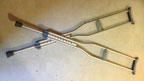
Crutches, which are needed for the first few months, cost about $15 to $40 for a basic pair or up to $100 or more for deluxe forearm crutches.
The doctor probably will either recommend exercises to do at home or suggest physically therapy, which costs about $50 to $75 per session for a total of up to $1,000 or more.
An artificial ankle joint has a lifespan of 10 to 15 years, so it might need to be replaced in the future.
Discounts:
Some orthopedic specialists offer discounts for uninsured/cash paying patients. For example, Southern California Orthopedic Institute offers discounted services for cash-paying patients, and Northwest Community Hospital Orthopedic Services Center[4] , in Chicago, offers discounts for prompt payment.
Shopping for ankle replacement:
Look for a board-certified orthopedic surgeon who has chosen to further specialize in foot and ankle surgery, and who has extensive experience performing total ankle replacements. The American Board of Orthopaedic Surgery[5] offers an orthopedic surgeon finder by city, state or zip code. Or, seek out a board-certified podiatric surgeon -- a podiatrist who specializes in surgery on the foot and ankle. The American Board of Podiatric Surgery[6] provides a doctor locator by city or zip code.
Ask about any financial connections the doctor might have to the manufacturer of hardware that the doctor uses.
Risks of ankle replacement include reaction to anesthesia, blood clots, amputation and, in rare cases, death. Over time, there also is the possibility of developing sensitivity to the metal or having the implant loosen or fail. Rarely, complications could lead to amputation.
Material on this page is for informational purposes only and should not be construed as medical advice. Always consult your physician or pharmacist regarding medications or medical procedures.
7 Lesser-Known Discounts for the 50+ Crowd As they age, members of the Baby Boomer generation don't like to admit that they're senior citizens, but they love getting discounts. It's kind of a quandary, because some of the best deals available are reduced prices for older folks. || Posted October 21 2013
7 Ways to Stretch Your Reduced Food Budget End of the year budgets are tight for everyone, especially in this economy.It's especially hard for the millions of Americans who depend on government programs like food stamps to help make ends meet. || Posted November 11 2013
Very happy I had the surgery. I was to the point of being too disabled to work and was at my wits' end. Finally Googled ankle replacement surgery and was surprised to find a specialist in this surgery in the next town over. This was in July 2008 and had the surgery in October 2008. The only out of pocket expenses for me were the RX copays as well as the doctor's office visit copays. (surgery, one night in the hospital, ambulance transport to a rehab in Toms River, 7 days in the rehab, wheelchair rental, walker...all 100% covered by insurance) Was out of work for 3 months and plan on having the other one done as soon as I can save enough sick time. Used more than I had planned for the first surgery. The recovery was a bit more than I expected. But now I know what to expect the next time.
CostHelper is based in Silicon Valley and provides consumers with unbiased price information about thousands of goods and services. Our writers are experienced journalists who adhere to our strict editorial ethics policy.
CostHelper Community
UTI urgent care visit Paid: 147.00 Visit was $135. Antibiotics was $12. Waiting for four hours in the waiting room and the visit was quick... [more]
Spanish Medical Interpreter Paid: 150.00 I worked with SynShyne Services out of Monroe, NC. They were so worth the price! Professional, friendly, accurate, great attitude and always on time. I recieved an itemized report after every contact and a user friendly invoice weekly... [more]
Skin prick allergy test Paid: 573.00 Took my 9 yr. old in after an allergic reaction to eggs. Several panels for nuts, fish & top 8 allergens. Sure enough, egg came up. Got a script for epinephrine and left... [more]






 Post
Post